


TruAge Epigenetic Test
Comprehensive epigenetic testing for total wellness.
777EUR
Explore
Epigenetic research explores how your lifestyle, environment, and daily choices influence the way your genes function — without changing your DNA itself. It allows us to observe how your body responds at the cellular level, often long before changes become visible in conventional medical tests or felt as symptoms.
Epigenetic testing is a cornerstone of preventive and personalized medicine.
Rather than diagnosing disease, it provides insight into early biological shifts that may signal accelerated aging, imbalance, or increased long-term risk. These subtle cellular changes can appear years before they are detected through imaging, blood panels, or clinical symptoms — offering a unique opportunity to act early, consciously, and individually.

In collaboration with a laboratory that works with prestigious institutions such as Harvard, Yale, and Duke Universities to ensure the scientific validity of its research, and is currently participating in more than 30 clinical trials,
we can offer you 2 different, yet complementary, epigenetic studies.



Epigenetics is the science of how our lifestyle and environment can change the activity of genes, turning certain genes on or off without changing the DNA itself. For example, if two people have the same predisposition to a disease, one may develop the disease and the other not, depending on how their epigenetic mechanisms work.
Unlike genetic tests that predict your future, our epigenetic tests reveal your current biological state. This helps you understand what factors are actively influencing your health today.
We examine multiple methylation sites in your DNA to identify key patterns closely linked to aging, inflammation levels, and the overall health of your immune system.
Our tests analyze how your daily habits, such as diet, stress, sleep patterns, and physical activity, affect your body at a molecular level, revealing key changes in gene expression.
Based on cutting-edge epigenetic algorithms, you’ll receive personalized recommendations to help optimize your diet, physical activity, and overall health. These are not general guidelines, but science-based advice tailored specifically to you.
Our epigenetic tests are based on advanced scientific research that examines how your lifestyle, diet, stress, sleep and environment can affect the expression of your genes – without changing the DNA sequence itself.
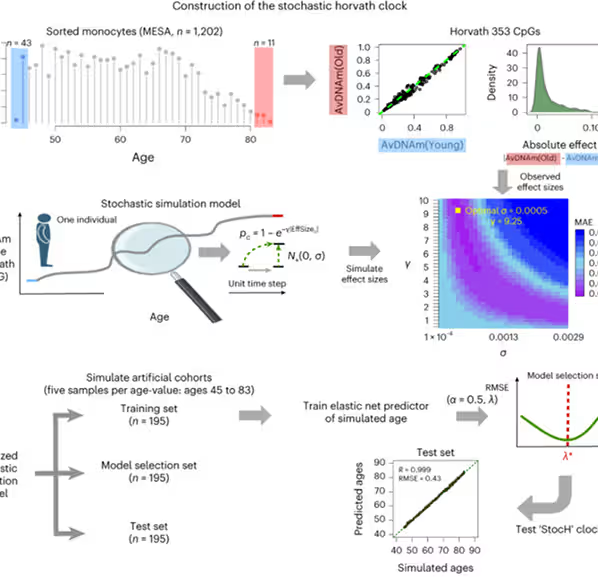
Simulating DNAm drift in >22k blood samples shows stochastic change explains 66–75 % of Horvath clock accuracy, 90 % for Zhang, but 63 % for PhenoAge, implying true aging reflects non-stochastic biology. Male, severe COVID-19 and smoker accelerations stem from these non-random effects.

In an 8-week twin study, only the vegan diet cut epigenetic age: lower PC GrimAge, PC PhenoAge, DunedinPACE and reduced aging in inflammation, heart, hormone, liver and metabolic systems. Omnivores didn’t shift, underscoring plant-based diets’ anti-aging edge.
Simulating DNAm drift in >22k blood samples shows stochastic change explains 66–75 % of Horvath clock accuracy, 90 % for Zhang, but 63 % for PhenoAge, implying true aging reflects non-stochastic biology. Male, severe COVID-19 and smoker accelerations stem from these non-random effects.